Signal Processing, Biometrics and Multimedia Forensics Lab
The Signal Processing, Biometrics and Multimedia Forensics Lab is a teaching and experimental laboratory dedicated to the intelligent analysis of signals, multimedia content and biometric data, with applications in the fields of security, digital identity, artificial intelligence and digital forensics. The laboratory combines expertise in statistical and numerical signal processing, machine learning, computer vision, audio analysis and cybersecurity, offering students on the Master’s Degree in Telecommunications an advanced environment for experimentation with real-world data.
Activities focus on the acquisition, filtering, representation and interpretation of audio signals, images, videos and data from biometric devices. Particular attention is paid to identity recognition and verification systems based on facial features, fingerprints, irises, voice and behavioral characteristics, as well as to the assessment of accuracy, robustness, reliability and privacy protection.
A significant part of the laboratory is dedicated to multimedia forensics, that is, the analysis of the authenticity, origin and integrity of digital content. Students can experiment with methods for detecting tampering in images and videos, deepfake detection, source camera identification, digital trace analysis, verification of audio content and the study of watermarking and data hiding techniques.
The laboratory promotes the development of software and hardware prototypes, the use of annotated datasets, the design of artificial intelligence algorithms, and the experimental validation of solutions for digital investigation, access control, smart monitoring and information protection.
Main equipment and facilities:
- high-performance workstations with GPUs for deep learning and multimedia analysis;
- RGB, IR and thermal cameras, high-speed cameras and video capture systems;
- professional microphones, microphone arrays, audio interfaces and digital recorders;
- fingerprint scanners, biometric sensors and systems for iris and facial recognition;
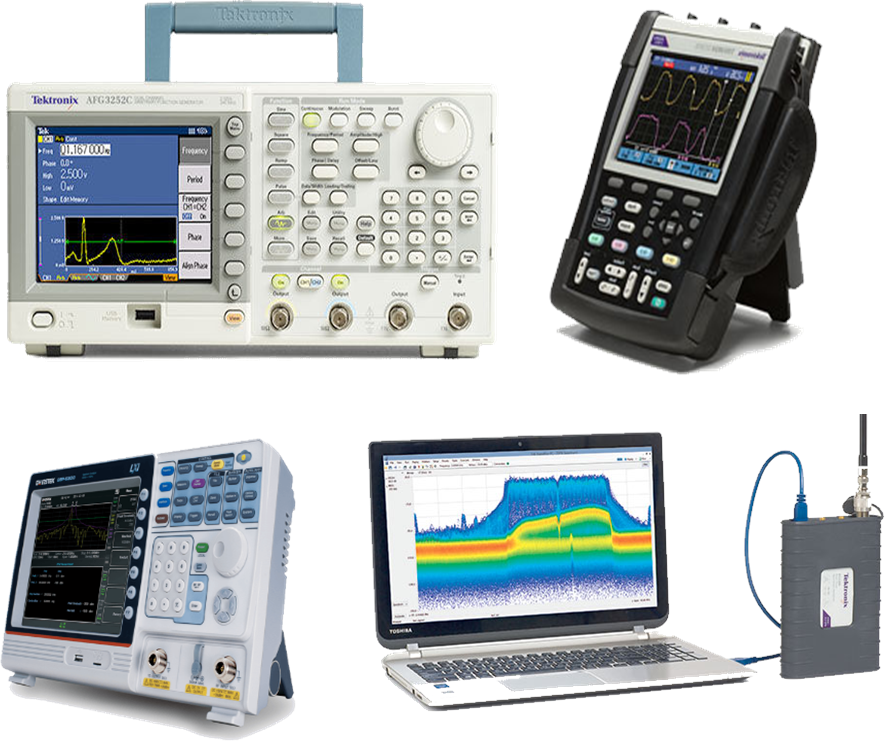
- digital oscilloscopes, spectrum analyzers and signal processing instruments;
- software platforms for computer vision, audio processing, machine learning and digital forensics;
- secure storage systems, dataset management and digital metadata analysis;
- tools for watermarking, steganography, integrity verification and deepfake detection.
The laboratory serves as a strategic hub for training professionals capable of tackling the new challenges of intelligent analysis, digital security and the reliability of multimedia content.
Signal Processing
The main tools and equipment available to students for laboratory work relating to signal processing are as follows:
- Tektronix MDO3054 Oscilloscope
- USB Oscilloscope PICOSCOPE 3206MSO
- Active Technologies AT-AWG1104 Function Generator
- 100 MHz Tektronix AFG3101C Arbitrary Function Generator
- TTI TGP110 Pulse Generator
- Tektronix RSA306 Spectrum Analyzer and PC software
- GE Instek GSP-9300 Spectrum Analyzer
- EA-PS 2042-10B Bench Power Supply + EASYPOWER PS2000B Software
- Tektronix PWS4305 Bench Power Supply
- Keysight U2542A Data Acquisition Unit
- Fluke Network FIBR-1-KITPRO-VFPM Fiber Optic Tester
- Fluke 87-V/E2K Industrial Multimeter
- Fluke 289 Multimeter
- MTX3292 Handheld Multimeter
- Keythley DMM7510 Bench Multimeter
- THS3014 Portable Oscilloscope
- Fluke FLK-V3003 FC KIT Multimeter
- Fluke 116/323 HVAC Combo Kit (Multimeter and Clamp Meter)
- Roland Cube 10 GX Amplifier
- BEHRINGER Behringer Q802USB Mixer
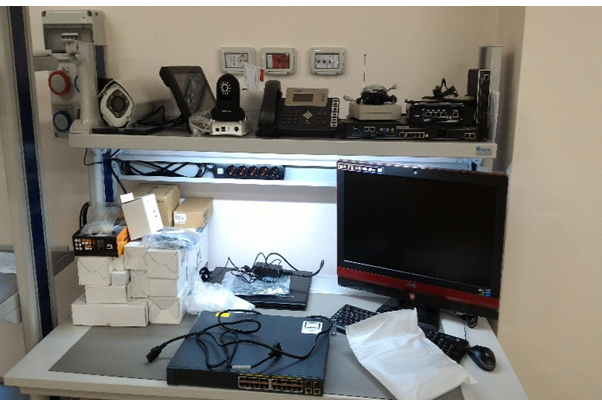
- VoIP Applications (IP Gateway, IP Phone, IP PBX, etc)
- DRONE TITAN 4HSE with TETRACAM
- Sensors for Home Automation
Biometrics
Laboratory activities in biometrics focus on the analysis and recognition of physiological and behavioral traits for human identification, monitoring, and characterization. In particular, the laboratory works on cardiac, voice, and facial biometrics through the acquisition and processing of cardiac signals, voice recordings, and facial images. These activities involve the use of dedicated devices, such as Things Lab electronic stethoscopes and smartwatches, combined with signal processing, data analysis, and artificial intelligence techniques.

Multimedia Forensics
The laboratory is equipped with software tools for the acquisition, processing, and analysis of signals, images, audio, and video. These tools support pre-processing, visualization, classification, and the development of machine learning and artificial intelligence models.
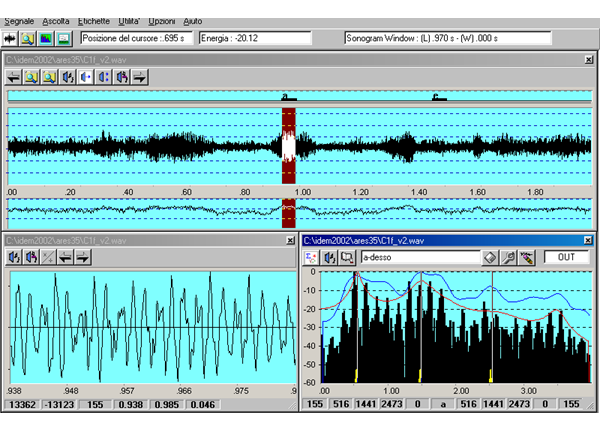
- IDEM Tool for Voice Identification
- Software for Voice Identification Nuance Forensics 9.2
- Car plate recognition kit